
Why Paphos Specifically — and Who It's Actually For

Paphos, Cyprus
Whenever someone asks me where in Cyprus they should buy, my first question back is always the same: what are you actually trying to do here?
Because the honest answer is that Cyprus isn't one market. It's four or five different markets in one small country, and the wrong choice between them isn't a small mistake — it shapes your daily life, your rental income, and your resale prospects for years.
I'm going to make the case for Paphos in this post, but I want to do it honestly. That means starting with what Paphos isn't, because that matters as much as what it is.
Let's get Limassol out of the way
If you're an executive at a financial services firm, a fintech founder, someone who needs to be in meetings every week with international corporates — go to Limassol. That's where the action is. Cyprus's financial services sector, its growing tech scene, the bigger international companies, the most expensive restaurants and the most polished new developments — Limassol has all of that, and there's no point pretending otherwise.
You'll also pay for it. Paphos apartments are roughly 30–40% cheaper per square metre than Limassol, and rental costs follow the same pattern. A two-bedroom apartment that rents for around €1,217 a month in Limassol rents for closer to €625 in Paphos.
If your life and work fit Limassol, that price difference might be entirely worth it. If they don't, you're paying a premium for an environment you don't actually need.
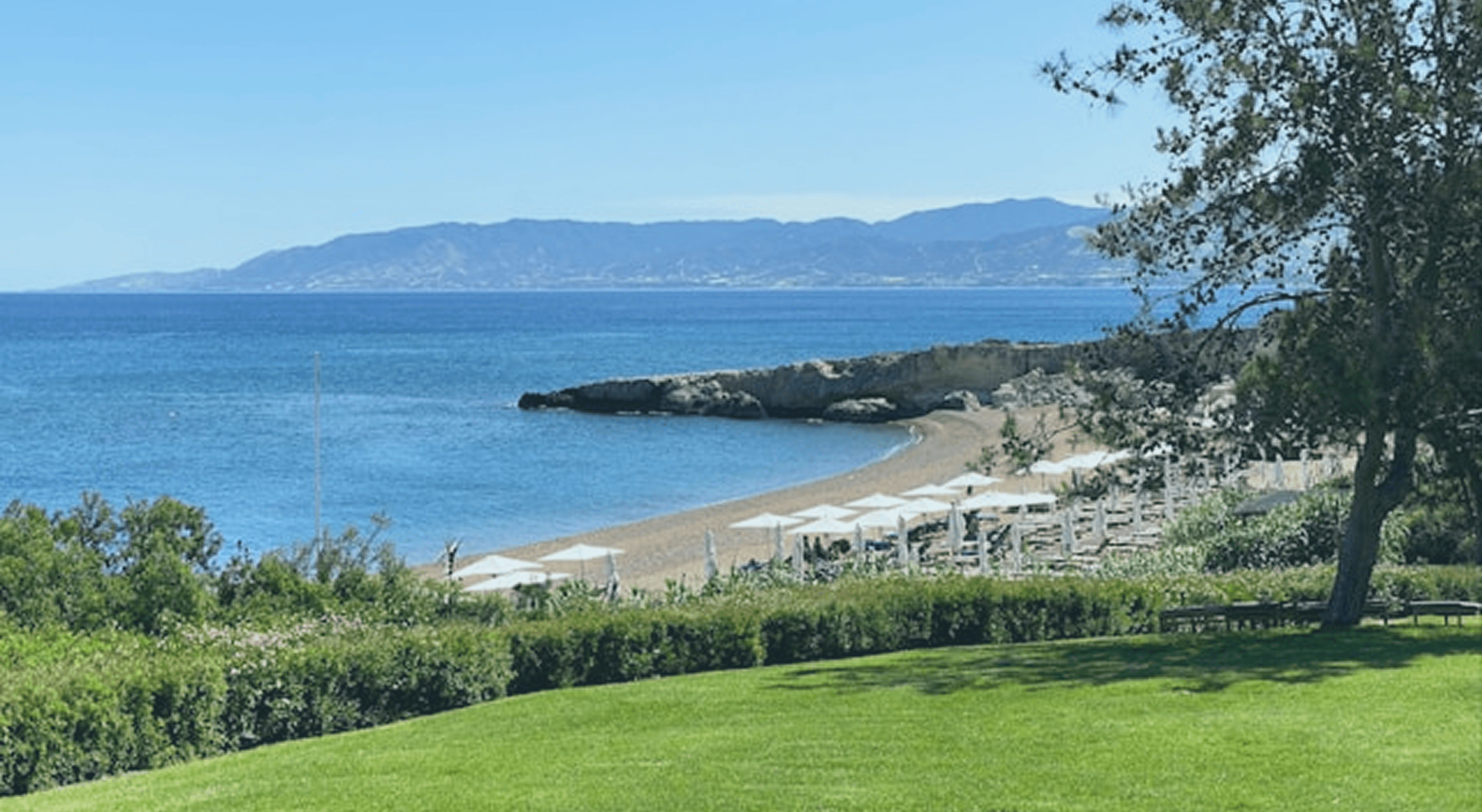
So who is Paphos for?
From what I see day to day, the people who genuinely thrive here fall into a few clear categories:
The relocator-investor. Someone who wants a real life in the EU — not just a residency card — and a property that earns when they're not using it. They want sea, walkability, decent infrastructure, and they don't want to pay Limassol prices for an environment they'll mostly experience on weekends anyway.
The remote worker or semi-retired professional. Working three or four days a week from a terrace, flying home or to clients once a month, building a slower life around something other than their job. Paphos's international airport, with its expanded winter flight capacity, makes this much more practical than it sounds.
The family looking for a softer landing. International schools (the International School of Paphos is well established), lower density than Limassol, beaches you can actually walk to, and a community of foreign buyers who've already done what you're about to do. There's a lot to be said for being surrounded by people who can tell you which lawyer they used and which developer they wouldn't.
The lifestyle-first investor with a long horizon. Not someone trying to flip in two years — Paphos isn't that market — but someone happy to hold a property for five to ten years, collect rental income, and have somewhere they genuinely want to be in the meantime.
The numbers that actually matter for Paphos:
Average price / Sq.m
€2,500–€3,500
Premium pockets €3,200–€5,500+
Entry point
€130–170K
For an older 1-bed in inland areas
Gross rental yields
5.5–8.5%
Higher on short-let, lower on long-term
Recent annual growth
~12% past year
Forecast 3–5% for the year ahead
The 12% number is striking but I'd be cautious about extrapolating it forward. Most analysts forecast a more sustainable 3–5% for the year ahead, which is honestly healthier — it means the market is maturing rather than overheating.
What's more interesting to me is the supply pipeline. Paphos has around 1,729 planned units versus Nicosia's 5,374, Limassol's 4,745, and Larnaca's 3,778. That's a meaningful constraint on future supply. Combined with the foreign-buyer-dominated demand profile, that's a relatively supportive structural picture.
Paphos isn't competing on volume. It's competing on liveability, value per square metre, and a buyer profile that's about lifestyle as much as yield.
A quick honest tour of the neighbourhoods
Paphos really isn't one market either. Different pockets behave differently, attract different buyers, and carry different risk profiles. The shortlist:
Kato Paphos (the harbour zone)
The UNESCO heritage core. Walkable, restaurants, the archaeological park, year-round demand for short-lets. Premium prices, but watch for over-priced trophy seafront units where view premiums of 30–50% can compress yields below 4%.
Coral Bay (Peyia)
Family beaches, large foreign community, strong short-let performance. More residential feel than Kato Paphos, but a serious drive from the city centre.
Aphrodite Hills (Kouklia)
Resort-branded community with golf, managed rentals, international buyer base. Premium pricing, but a turnkey investment proposition if you don't want to be hands-on.
Chloraka, Tala, Geroskipou
The mid-tier sweet spot for many foreign buyers. New developments, sea views from elevated plots, more space for the money. Where I'd point most relocator-investors first.
Anavargos, inland villages
The entry point — older stock, lower yields, weaker resale liquidity. Fine if you understand what you're getting; risky if you don't.
The honest downsides
Paphos isn't perfect and I'd rather you hear this from me than discover it after you've moved.
It's smaller and slower than Limassol. If you need a buzzing business environment, you'll find it limited. The professional networking opportunities are real but smaller in scale. International corporate presence is thinner.
The short-term rental market is competitive, particularly in the dense clusters near Harbour in Kato Paphos. Identical units competing for the same guests means pricing power drops sharply in shoulder season. A Tourism Accommodation License is required, and the days of unlicensed Airbnb arbitrage are over.
Resale on older inland stock is slow. If you buy in a remote village expecting quick liquidity, you'll be waiting a long time. The properties that move are the ones with the right combination of location, condition, and energy efficiency rating.
And winter is quieter than people sometimes admit. The expanded flight capacity has helped, but if your investment thesis depends on year-round tourist density, Limassol or Larnaca might serve you better.
Why I'm here
Honestly, I work in Paphos because it's where the kind of clients I want to work with end up. People who care more about a life that fits them than maximising every percentage point of yield. People who are committing real money to a real place rather than executing a financial product. That's the conversation I prefer to have.
If your priorities look different — if you're optimising purely for capital appreciation, or if your work requires being in a major corporate environment five days a week — I'll be the first to tell you Paphos probably isn't your best fit. There's no point pretending otherwise.
But if what you actually want is a property in the EU that you can use, rent, and feel good about owning, in a place where the daily quality of life is genuinely good and the entry price isn't punishing — Paphos has been quietly delivering that for years. The numbers back it up, the demographics back it up, and the people who live here mostly don't leave.
That's the case. Make of it what you will.
Got questions about specific neighbourhoods, the rental licensing process, or just whether Paphos fits what you're trying to do? Always happy to share what I know — drop me a message anytime.